

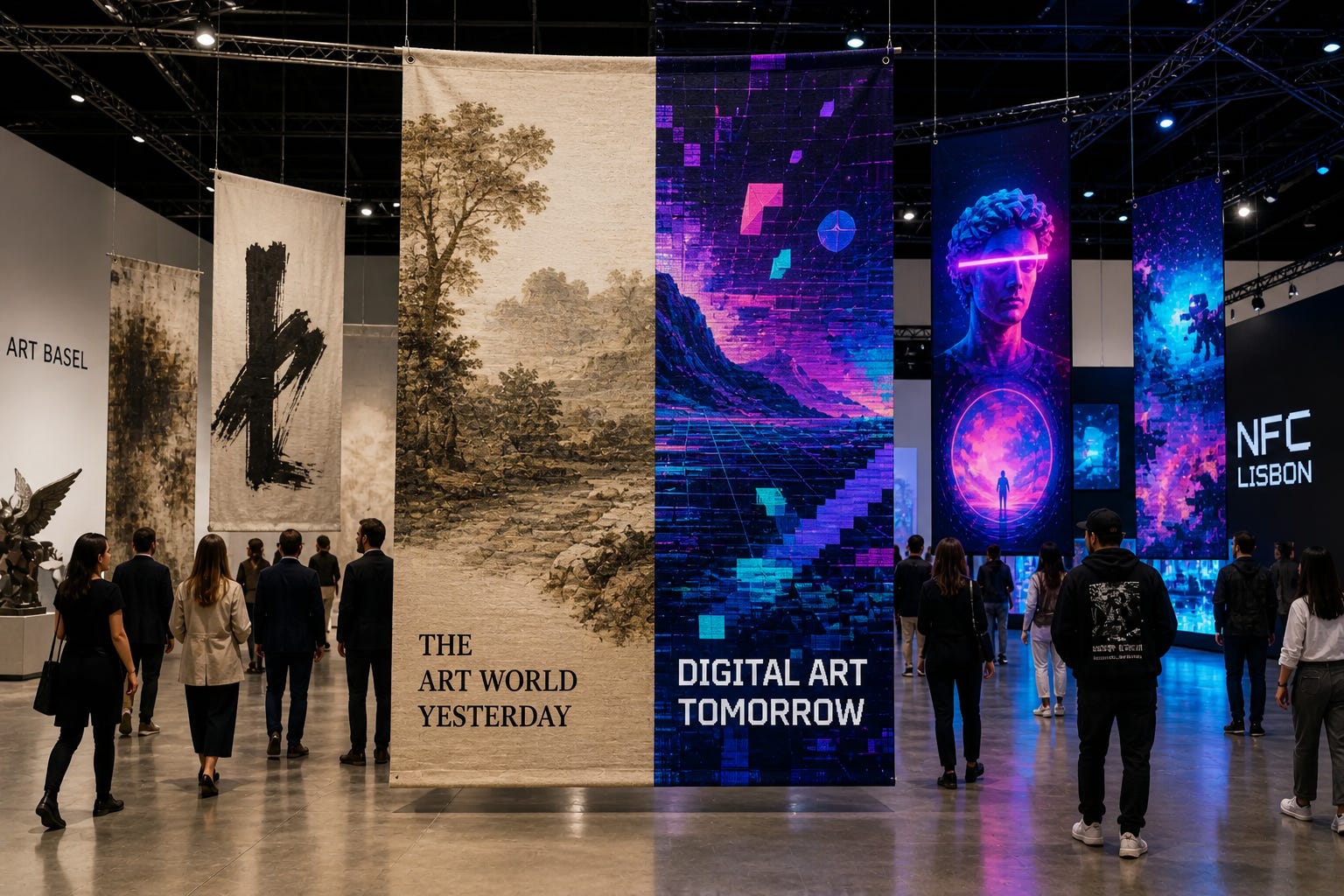
This episode brings together almost the full 100 Collectors team for a deep discussion on the evolution of digital art events, market structures, and collector onboarding.
The conversation explores how the digital art ecosystem has evolved from early NFT-native experiments to broader adoption by traditional art institutions, and whether this evolution is actually working.
Key Topics Covered
1. The evolution of digital art events
Early NFT events (2018–2019) were grassroots and experimental.
From 2021, traditional players (auction houses, galleries, museums) entered the space.
Today, the ecosystem is questioning whether to:
adapt to traditional formats (art fairs, biennales), or
build native, digital-first experiences.
2. The “wrong order” of adoption
Auction houses entered first during the NFT boom, focusing on secondary sales.
This disrupted the natural art market structure (primary → secondary).
Result:
inflated prices for some artists
long-term damage for others
unsustainable market dynamics
3. The limits of traditional art institutions
Many institutions adopted NFTs opportunistically during the hype.
Most have since:
scaled back
or shut down their digital art initiatives
Key issue: lack of profitability and long-term vision.
4. The rise of new formats & experiences
Emerging events like NFC Lisbon experiment with:
immersive formats
hybrid exhibition models
mixing culture (gaming, crypto, art, community)
Focus shifts from display → experience and engagement.
5. The core debate
Should digital art:
integrate into the traditional art world?
or build a parallel ecosystem?
No clear answer here but consensus: current models are still experimental.
Key Insight (Quote)
“Digital art shouldn’t just mimic the traditional art world because it has the potential to build an entirely new cultural and experiential ecosystem”


