

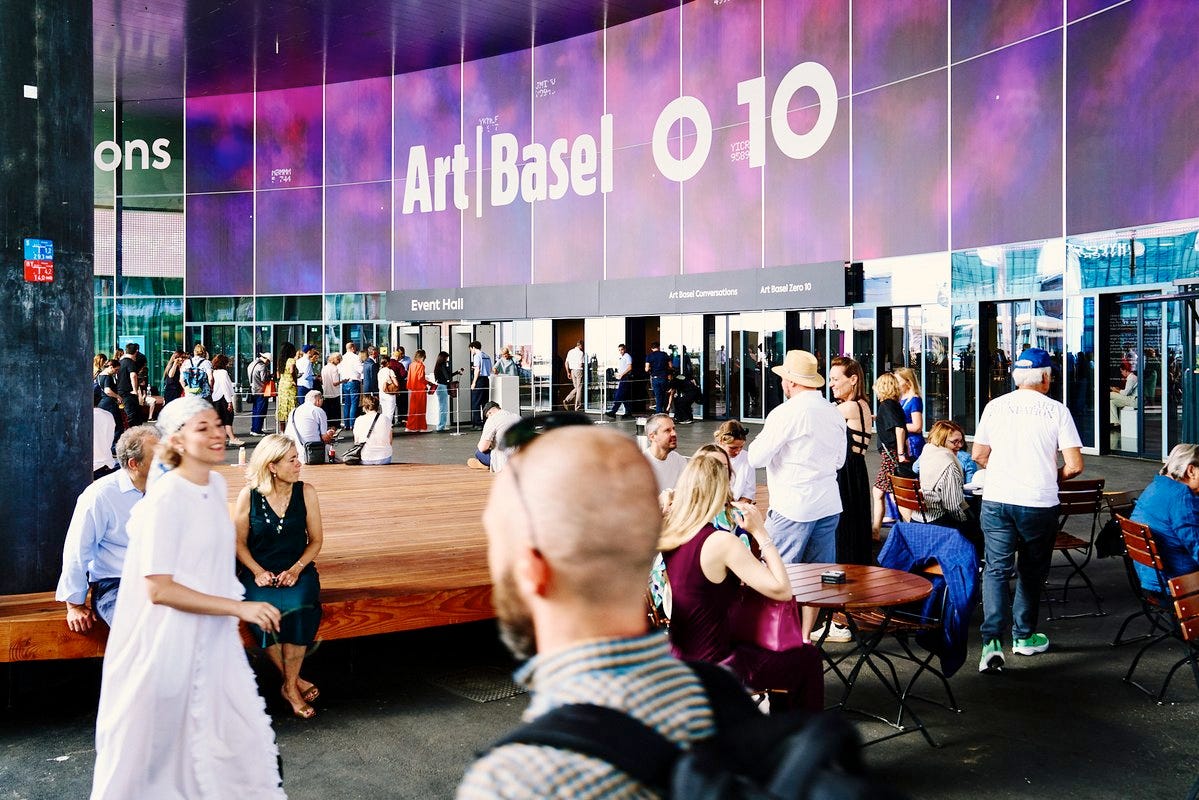
NFT Morning teams is back with a special episode dedicated to Art Basel 2026 and everything that happened around the world’s most prestigious art fair.
Joined by Eleonora Brizzi and Pauline Foessel (100 Collectors), we take a step back to analyze what this edition really means for digital art, NFTs, blockchain art and the evolution of the contemporary art market.
This conversation goes far beyond a simple event recap. It explores the growing legitimacy of digital art, the success of Art Basel’s 010 sector, the role of collectors and institutions, and the questions that will shape the next chapter of the ecosystem.
010 at Art Basel: A Turning Point
The new 010 sector established itself as one of the highlights of Art Basel Basel. Positioned at the entrance of the fair, it attracted strong public interest, impressive attendance and significant sales, confirming that digital art is no longer a side conversation but part of the global contemporary art landscape.
The discussion compares the three editions of 010, Miami, Hong Kong and now Basel, showing how each reflects its own cultural identity while contributing to the maturation of digital art.
From NFTs to Digital Art History
One of the strongest signals from this edition was the connection between today’s blockchain artists and the pioneers of digital and computer art.
Rather than presenting NFTs as a separate movement, Art Basel positioned them within a broader history that includes Vera Molnar, Harold Cohen, John Gerrard and decades of digital creation, reinforcing the legitimacy of the medium.
A Strong Commercial Success
The episode reviews the most notable sales of the week, including John Gerrard’s $500,000 sale, William Mapan’s sold-out presentation and the strong commercial performance across several galleries.
Beyond the numbers, the discussion focuses on who is actually buying these works, how collectors are entering the space and whether traditional art collectors are finally embracing digital art.
Digital Art Was Everywhere
Art Basel wasn’t the only destination.
The team also explores the explosion of digital art across Basel, from Basel Social Club to museum exhibitions, institutional shows and independent events, demonstrating that digital art has become an essential part of Basel Art Week.
A special focus is given to the work of 100 Collectors, whose curated tours, collector dinners and community events connected artists, galleries, collectors and institutions throughout the week.
Is Digital Art Finally Mainstream?
Perhaps the most fascinating part of the discussion is the debate around the future.
Has digital art finally entered the establishment?
Or is this simply another cycle in the long history of media art?
Can blockchain technology fundamentally change the way art is collected, distributed and experienced?
These questions lead to one of the deepest conversations we’ve had on NFT Morning about the maturity of the digital art market.
Key Takeaway :
Art Basel Basel 2026 wasn’t just another art fair, it may be remembered as the moment digital art stopped asking for legitimacy and started defining its place within contemporary art history.


